
Can we prevent climate destabilization in the Arctic?

The Arctic Stabilization Initiative (ASI) produces the evidence needed to assess whether Arctic-targeted climate interventions are safe, effective, and feasible.
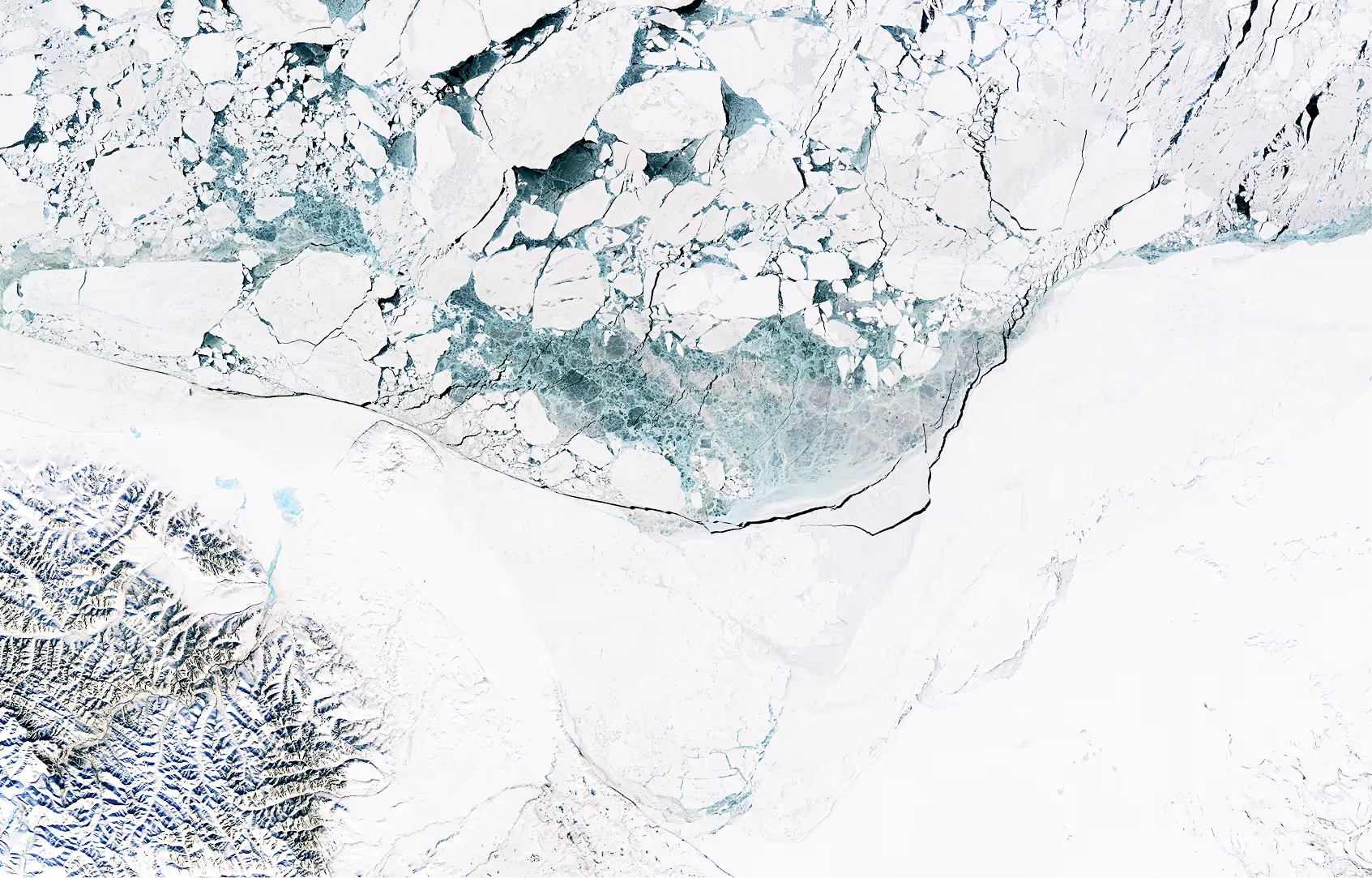
Aerial view of cracked and fragmented ice floating on frigid water over snowy terrain.
The Arctic supports a livable climate worldwide, shaping sea level, weather, and ocean circulation.

Several of its core systems are now approaching critical thresholds.

ASI investigates whether regionally-targeted interventions could help stabilize them.
Problem

As Arctic ice declines, Earth’s whole climate shifts

Even with rapid decarbonization, current trajectories will force the Arctic past critical thresholds within decades.

Arctic Sea Ice Is Vanishing

The Arctic is warming up to four times faster than the global average.

September minimum sea ice extent, 1979–2025, with CMIP6 projections to 2100 under SSP2-4.5 (~current Paris Agreement pledges, +2.7°C global warming).

Explainer: Under current Paris Agreement pledges, global warming is projected to reach +2.7°C above preindustrial levels by 2100, the trajectory under which the Arctic Ocean is expected to be ice-free for a month each summer (Stroeve et al., 2025). Less than 1 million km² of sea ice is the definition of an “ice-free Arctic” — for scale, about the size of Egypt.

Sea-ice loss is a cascade trigger: less white surface means less reflected sunlight, amplifying regional warming and accelerating sea ice decline, permafrost thaw, and ice-sheet melt.

The shaded projection band shows the 5th–95th percentile range across the CMIP6 SSP2-4.5 multimodel ensemble — the international set of climate-models underpinning IPCC AR6 — capturing 90% of model projections.

The solid line within the band is the multimodel ensemble mean: the central projection, computed as the average across all models in the ensemble.

Trend line: ordinary least-squares (OLS) regression on the observed 1979–2025 series.

Methodology: CMIP6 SSP2-4.5 multimodel ensemble statistics from Notz & SIMIP Community (2020). Envelope values are sea-ice area; observations are sea-ice extent (~15% higher in September); both use the 1 M km² ice-free threshold. *Projected milestone timing carries inherent uncertainty. Sources: NSIDC v4; IPCC AR6 (2021); Jahn, Holland & Kay (2024); Heuzé & Jahn (2024); Stroeve et al. (2025); Notz & SIMIP Community (2020); Schmidt (2025).

How the program works

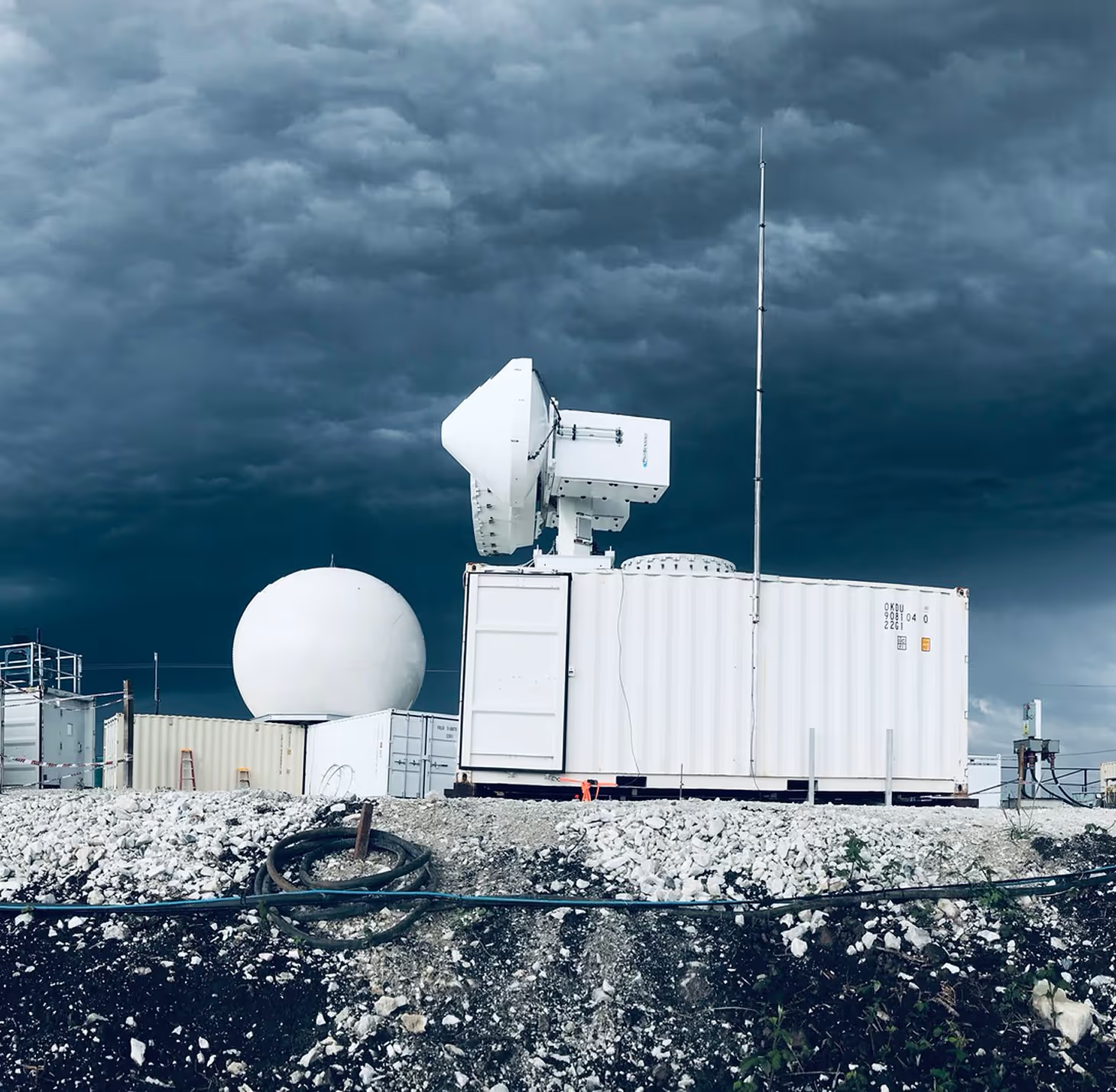
White radar and satellite communication equipment on rocky ground under dark stormy sky.

What we do

A portfolio approach

Expand downward arrow icon.

Directed and time-bound

Expand downward arrow icon.

Stage-gated

Expand downward arrow icon.
Our first focus
Single white cloud with soft edges against a transparent background.A white and gray cloud with soft, fluffy edges on a transparent background.A white and gray cloud with soft, fluffy edges on a transparent background.Puffy white cloud with soft edges isolated on a black background.White and gray soft fluffy clouds on transparent background

Mixed-Phase Cloud Thinning (MCT)

About 60% of Arctic clouds contain both ice crystals and liquid water droplets.

Serving as both a blanket and a sun shade, these mixed-phase clouds tend to warm the sea ice surface for most of the year.

When mixed-phase clouds trap heat, seeding them to trigger ice formation could thin or dissipate them, allowing heat to escape to space.

Small airplane seen from below flying against a cloudy blue sky with a play button overlay.
Program Structure

Our timeline

A 5-year program in four phases, each ending in a decision gate. At each decision gate, we determine whether a candidate intervention advances to the next phase or is deprioritized so that resources can be reallocated to other promising interventions. The program concludes by delivering formal scientific benchmarks and modeling tools to the public institutions, multilateral bodies, and Indigenous Rights holders that this evidence is meant to serve.

Phase I
Baseline & Targeting
12-18 months
Phase I kicks off a program-long effort to develop the fit-for-purpose modeling approaches needed to assess Arctic-targeted climate interventions, beginning with MCT, along with the observations-based frameworks required to evaluate the models.
Observational Capabilities
12-18 months
Phase II develops and tests the observational approaches needed to resolve core questions about how background aerosols interact with Arctic mixed-phase clouds, how susceptible those clouds are to changes in aerosols, and how that shapes the surface energy budget.
Phase II
Phase III
Outdoor Experiment & Portfolio Scoping
12 months
If critical uncertainties remain that only a cloud seeding experiment can resolve, and the Independent Oversight Committee approves, Phase III carries out a small-scale outdoor experiment designed in collaboration with Indigenous partners. An experiment would test whether seeding produces the measurable response we expect, continuously monitored against limits the Independent Oversight Committee can enforce by halting it. In parallel, we formally scope and prioritize complementary interventions, beginning to build the portfolio beyond MCT.
Synthesis & Decision Benchmarks
12 months, conditional extension
Synthesis across all evidence streams. We deliver formal scientific benchmarks, predictive tools, techno-economic assessments, and a portfolio roadmap for next-generation Arctic interventions. If an outdoor experiment is warranted and approved, the program may extend to six or seven years to complete the synthesis, modeling, and benchmarks that follow from it.
Phase IV
Program End
Program End
The evidence determines what happens next.

If multiple independent lines of evidence converge in support of MCT, ASI delivers its formal scientific benchmarks, a fit-for-purpose modeling approach, and synthesis findings to the institutions and rights-holders this work is meant to serve. If the evidence does not converge, or converges against MCT, ASI deprioritizes MCT and reallocates resources to other promising, underresourced candidate
PROPOSALS

Open Requests for Proposals (RFPs)

We advance the research needed to assess the safety, feasibility, and efficacy of Arctic-targeted climate interventions.

Red tracked vehicle parked outside a raised industrial platform in a snowy, icy landscape.
RFP_004
Deadline
Right-facing chevron icon.
Sept 2026

Why reversibility matters in climate intervention

New instrumentation reveals how clouds respond to perturbation

Category
Right-facing chevron icon.
Deadline
Right-facing chevron icon.
Funding
Right-facing chevron icon.
Large white geodesic radar dome atop open shipping containers under a cloudy sky.
RFP_009
Deadline
Right-facing chevron icon.
May 2026

Observing the Arctic clouds at scale

New instrumentation reveals how clouds respond to perturbation

Category
Right-facing chevron icon.
Deadline
Right-facing chevron icon.
Funding
Right-facing chevron icon.
Large glacier with jagged ice formations above icy water with floating ice chunks.
RFP_002
Deadline
Right-facing chevron icon.
July 2026

Why reversibility matters in climate intervention

New instrumentation reveals how clouds respond to perturbation

Category
Right-facing chevron icon.
Deadline
Right-facing chevron icon.
Funding
Right-facing chevron icon.
White radar installation with antenna and dome on rocky ground under dark cloudy sky.
RFP_012
Deadline
Right-facing chevron icon.
Dec 2026

Observing the Arctic clouds at scale

New instrumentation reveals how clouds respond to perturbation

Category
Right-facing chevron icon.
Deadline
Right-facing chevron icon.
Funding
Right-facing chevron icon.

Coming soon!

Our team

Close-up of a smiling woman with curly hair wearing a black blazer.
Program Director

Charlotte DeWald

Charlotte DeWald is an atmospheric scientist specializing in ice-nucleating particles, the rare aerosols that trigger cloud ice formation, influencing precipitation and the Earth's radiative balance. She holds a Ph.D. in Climate Science from Scripps Institution of Oceanography

Smiling man with mustache wearing white shirt and dark gray blazer against a black background.
Senior Strategic Advisor

Ryan O'Donnell

A former U.S. diplomat and disaster response leader, Ryan spent a decade working in disaster-preparedness and response operations, as well as co-designing climate resilience initiatives with Indigenous Peoples. He leads ASI’s engagement with Indigenous Peoples, whose lands are directly affected by Arctic climate risks, and the governments and multilateral institutions whose partnership is needed for successful initiatives.

Scientific Advisory Board

The Scientific Advisory Board is an independent group of scientists who advise on ASI's research strategy. Its members bring expertise across Arctic clouds, aerosol–cloud interactions, modeling, and observations. They help align ASI's research with the evidence each stage gate requires.
Man with curly hair, beard, and glasses looking at camera with blue sky background.

Dr. Matthew Shupe

Senior Research Scientist, Cooperative Institute for Research in Environmental Sciences at the University of Colorado and NOAA
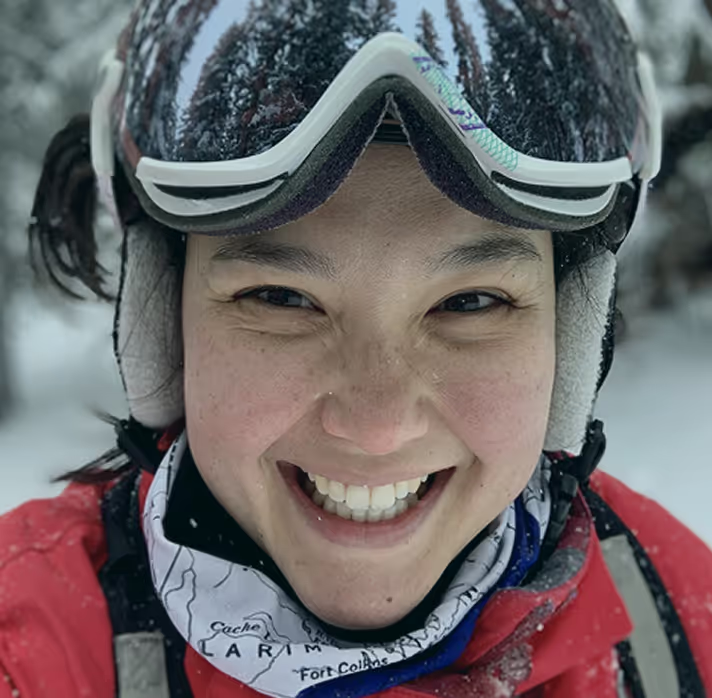
Smiling person wearing ski goggles, red jacket, and neck gaiter in a snowy outdoor setting.

Dr. Christina McCluskey

Scientist V, The National Center for Atmospheric Research

Portrait of Dr. Graham Feingold, NOAA atmospheric scientist and ASI Scientific Advisory Board member.

Dr. Graham Feingold

Research Scientist, NOAA

PRINCIPLES

Our Guiding Principles

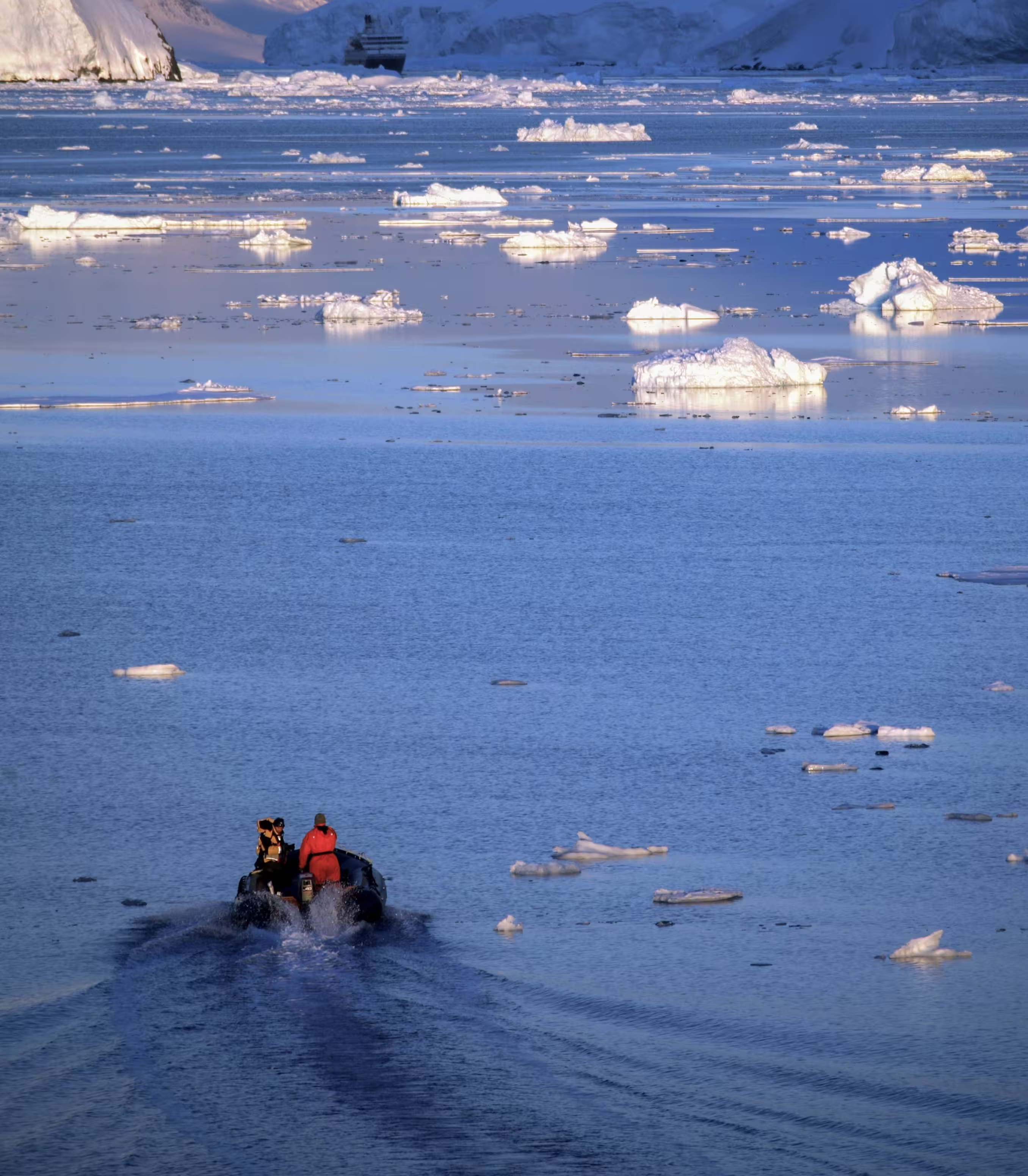
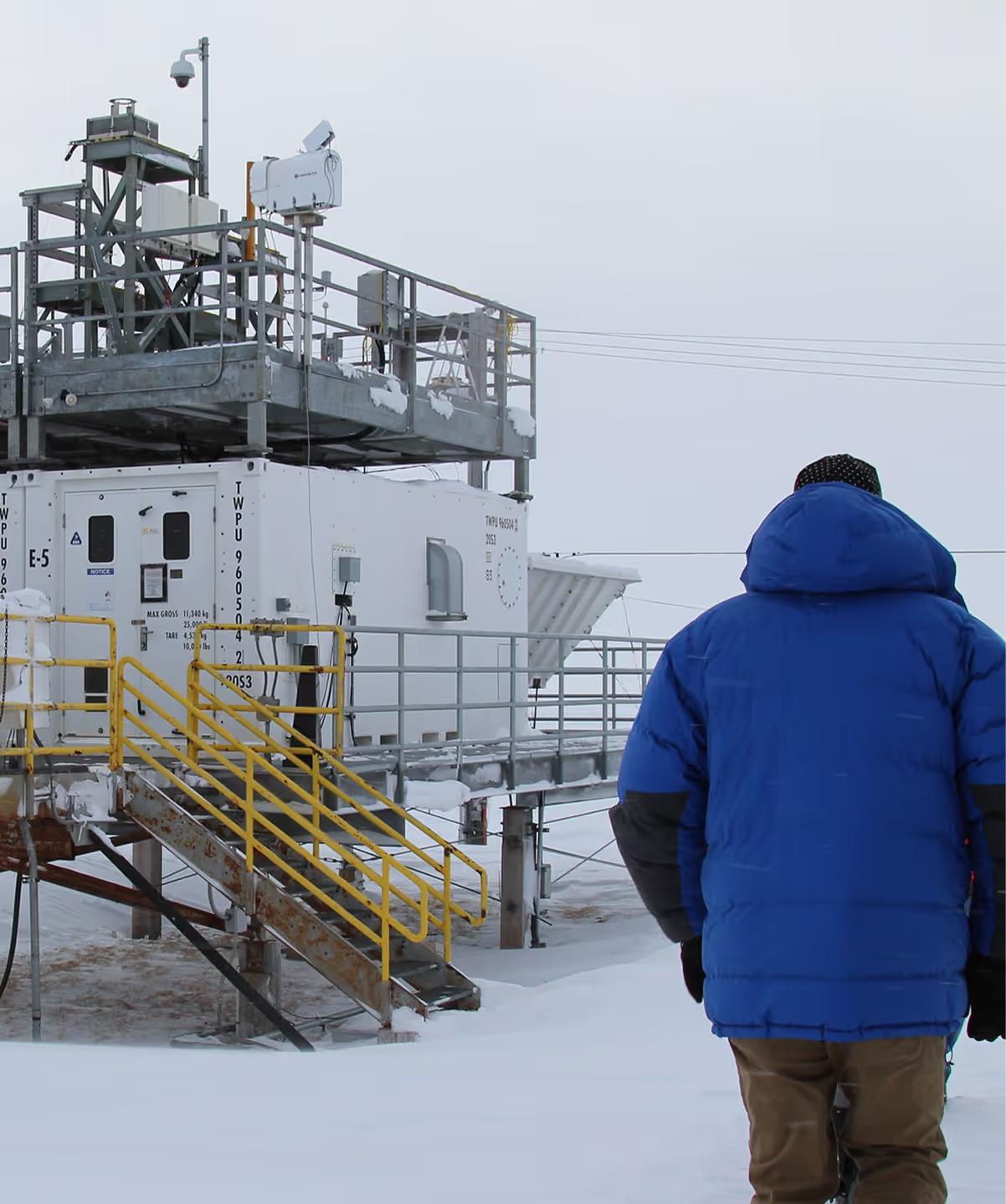
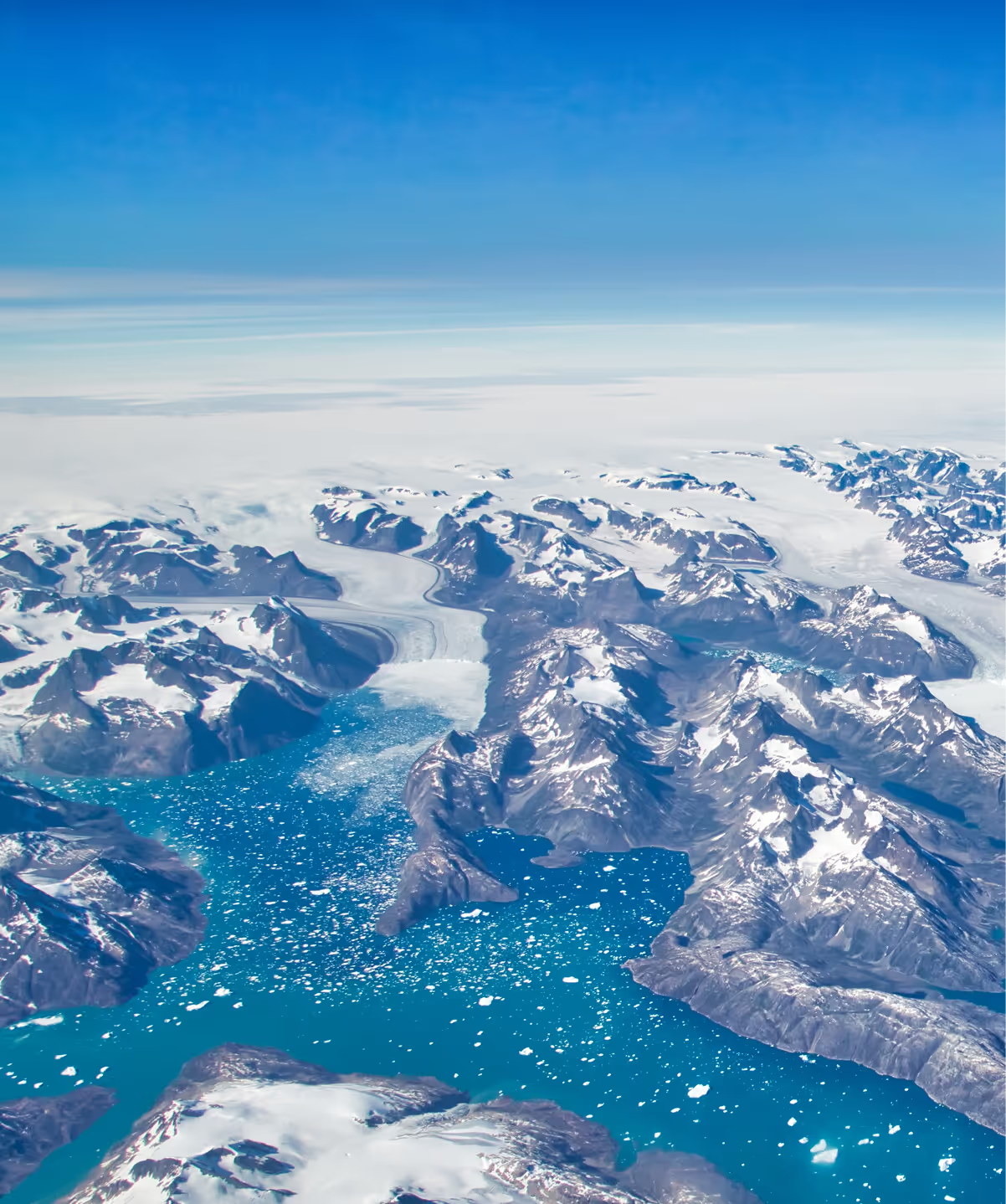
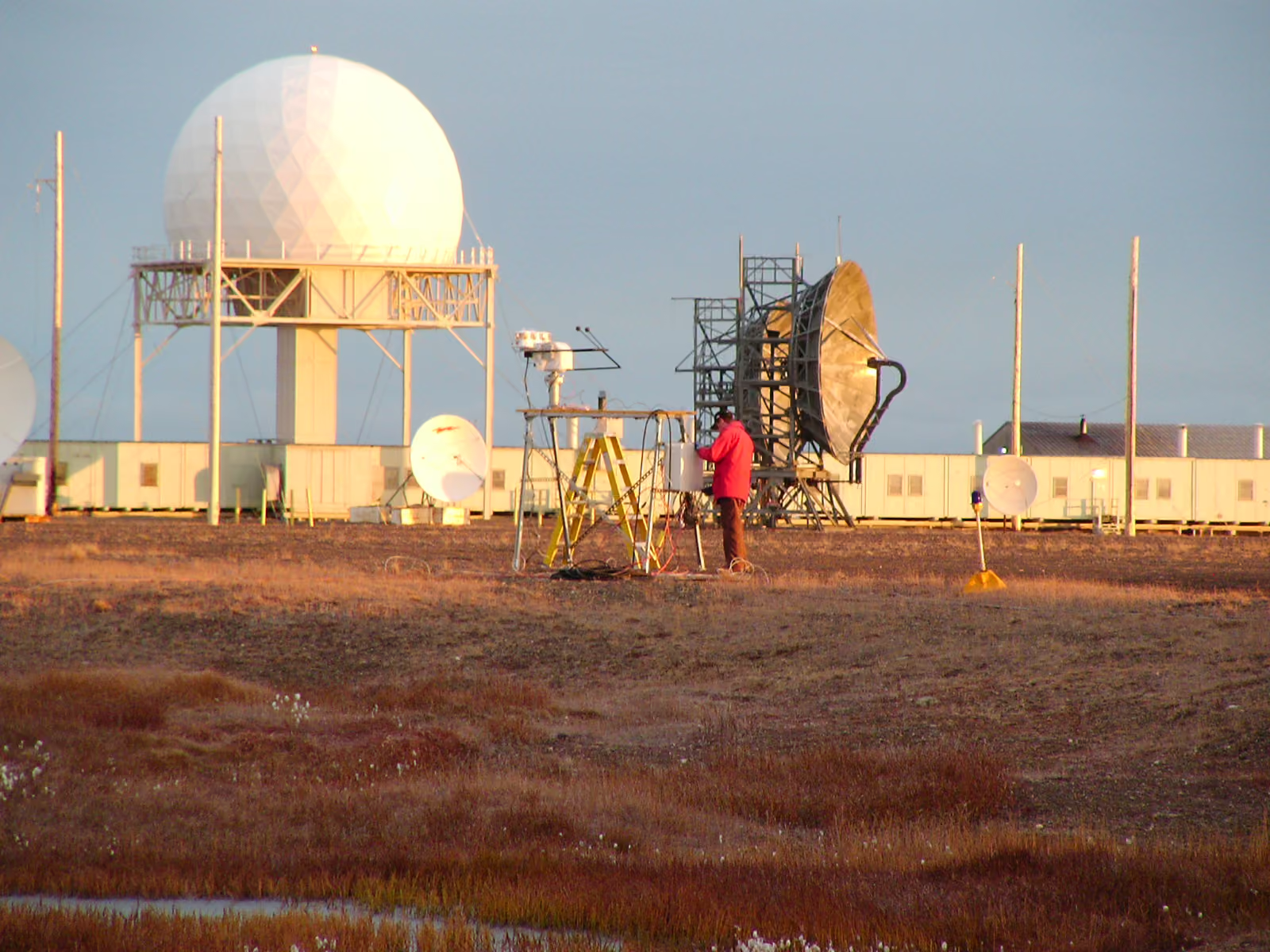
Small boat touring icy glacial waters on a sunny day.Person in blue winter jacket facing an industrial research station in a snowy landscape.Aerial view of snow-covered mountains surrounding a blue fjord with icebergs floating on the water.Person in red jacket working near large radar and satellite dishes on a barren field.Three people in red parkas stand on snow; one holds a large white weather balloon; plane and machinery in background.Red tracked vehicle parked outside a raised industrial platform in a snowy, icy landscape.Expand downward arrow icon.

Research as a Responsibility

Expand downward arrow icon.

Decarbonization and carbon removal remain crucial but are insufficient on their own to address near-term Arctic destabilization risks due to processes already underway as a result of carbon buildup. In this context, it is imperative to research the safety, efficacy, and feasibility of climate stabilization interventions.

Indigenous Partnership

Expand downward arrow icon.

Arctic science has too often proceeded without the consent of, or benefit to, Indigenous Peoples. ASI works to redefine that relationship, engaging Indigenous Peoples early, substantively, and as rights-holders in their ancestral lands. We treat free, prior, and informed consent as a precondition for field research and dedicate significant resources to Indigenous-defined priorities through our Indigenous Resilience and Rights fund, which operates independent of ASI's research operations.

Evidence before advancement

Expand downward arrow icon.

We begin with what existing data and models can tell us about the physical processes involved, advancing predictive understanding where possible. Where decision-critical uncertainties remain, we ask what new observations or modeling efforts could resolve them. We iteratively revisit the remaining uncertainties before asking whether a small-scale experiment is warranted. Any such experiment requires IOC approval.

Updates

Latest from ASI

Coming Soon!

No news currently. Coming soon.
Back arrow icon.
Forward arrow icon.
JOIN FORCES

Want to apply, partner, or follow our work?

Whether you are a scientist, Indigenous leader, funder, or policy maker, we want to work together.

Person in blue winter jacket facing an industrial research station in a snowy landscape.